The open source library, for developing multi-touch applications, PyMT has just been released in version 0.4. Please take a look at the release notes to see what’s new in this release. Besides all the new stuff this release brings, the PyMT website has also been updated with a new slick look.
If you know your way around Python and want to develop applications that utilize new user interfaces, such as multi-touch, you should check out PyMT. You may have seen examples of this technology in use on CNN, at a mall, or on the Microsoft Surface(R). Multitouch is here to stay - let's hope PyMT will push Linux and open source forward in this area.
Felipe Gomes demonstrates in his latest blogpost the progress of multitouch support for Firefox, and here’s a video which showcases some possible interactions and use cases for what web pages and webapps can do with a multitouch device.
Felipe writes:
We’re working on exposing the multitouch data from the system to regular web pages through DOM Events, and all of these demos are built on top of that. They are simple html pages that receives events for each touch point and use them to build a custom multitouch experience.
We’ll also add CSS support to detect touchscreen devices. Using the pseudo-selector :-moz-system-metric(touch-enabled), you can apply specific styles for your page only if it’s viewed by a touchscreen user. That, along with physical CSS units (cm or in), makes it possible to adjust your webapp for a touchscreen experience.
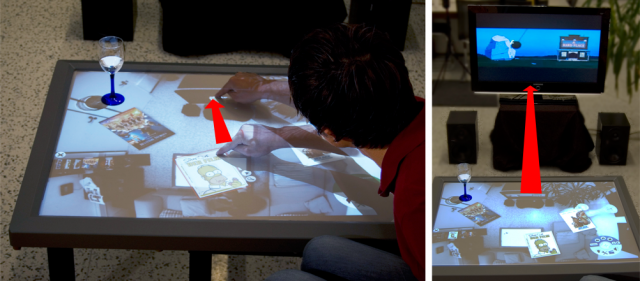
The amount of digital appliances and media found in domestic environments has risen drastically over the last decade, for example, digital TVs, DVD and Blu-ray players, digital picture frames, digital gaming systems, electronically moveable window blinds, and robotic vacuum cleaners. As these devices become more compatible to Internet and wireless networking (e.g. Internet-ready TVs, streaming digital picture frames, and WiFi gaming systems, such as Nintendo’s Wii and Sony’s Playstation) and as networking and WiFi home infrastructures become more prevalent, new opportunities arise for developing centralized control of these myriad devices and media into so called “Universal remote controls”. However, many remote controls lack intuitive interfaces for mapping control functions to the device intended being controlled. This often results in trial and error button pressing, or experimentation with graphical user interface (GUI) controls, before a user achieves their intended action.
To address this issue, CRISTAL (Control of Remotely Interfaced Systems using Touch-based Actions in Living spaces) was developed. CRISTAL simplifies the control of our digital devices in and around the living room. The system provides a novel experience for controlling devices in a home environment by enabling users to directly interact with those devices on a live video image of their living room using multi-touch gestures on a digital tabletop. Fantastic idea, but sadly it does not run Linux, but Microsoft Surface software.